Você já percebeu que, em momentos de ansiedade intensa, a mente parece girar no mesmo ponto sem sair do lugar? Um pensamento leva ao outro, volta para o primeiro, e a sensação é de estar preso dentro de um loop que não tem botão de pausa. Essa experiência tem uma base neurofisiológica concreta, e ela envolve um padrão de atividade elétrica chamado theta.
Theta não é uma onda exótica nem um termo de autoajuda vestido de neurociência. É uma faixa de frequência mensurável, com correlatos funcionais bem documentados. O problema começa quando alguém lê um artigo superficial sobre "ondas cerebrais" e conclui que precisa "ativar seu theta" para relaxar, ou quando um serviço de neurofeedback vende um protocolo padronizado sem antes ler o que o cérebro daquele paciente específico está fazendo. Nos dois casos, a informação sobre theta está sendo mal usada.
O que theta realmente faz no cérebro
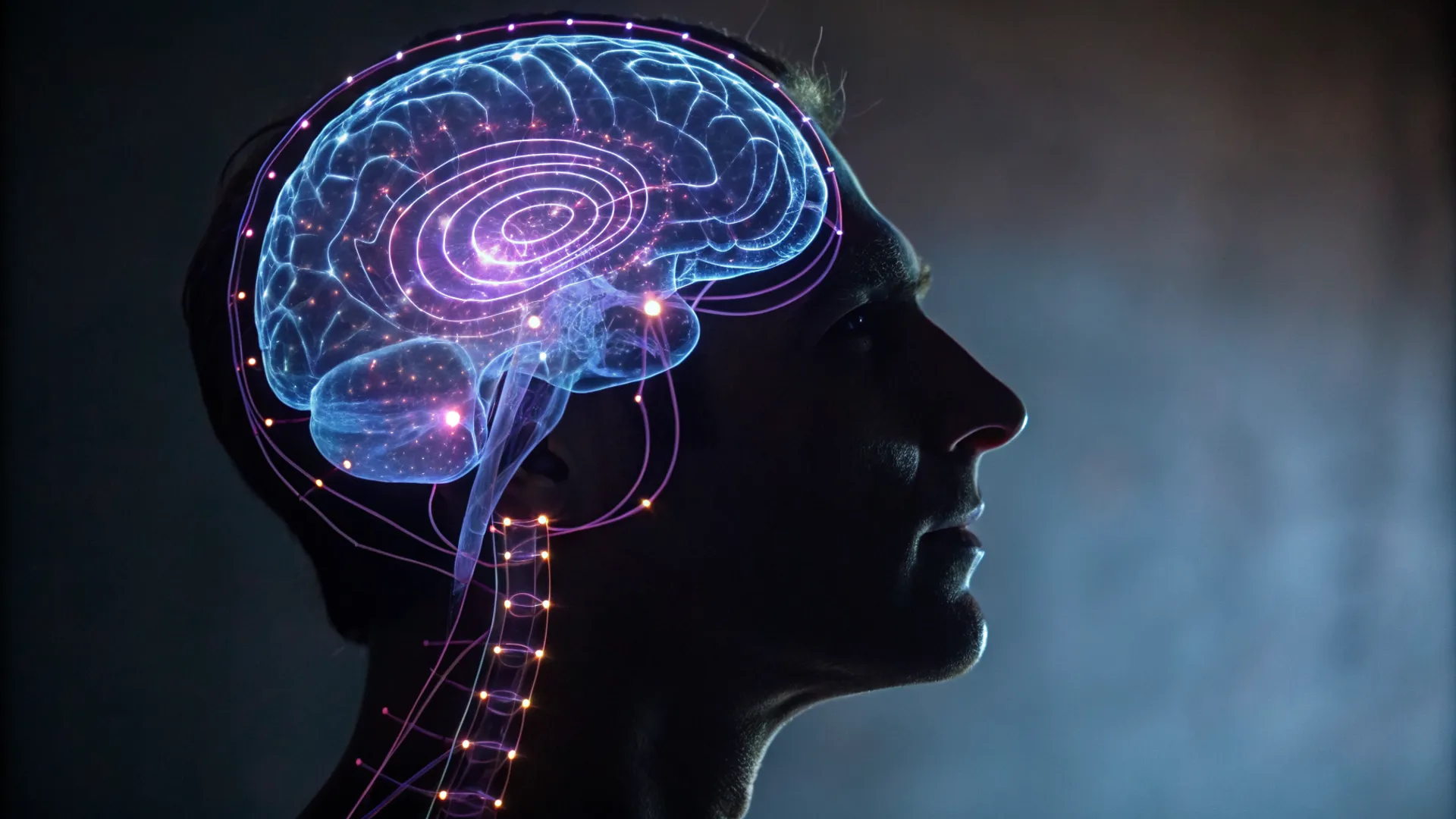
Theta é uma faixa de frequência que oscila entre 4 e 8 Hz, e sua função depende muito de onde no cérebro ela está sendo gerada e em qual contexto.
No hipocampo, theta é fundamental para consolidação de memória e navegação espacial. No córtex pré-frontal medial, theta está ligada ao controle executivo, manutenção de informações na memória de trabalho e processamento de maior carga cognitiva [1]. Isso significa que theta fronto-medial não é sinal de relaxamento: é sinal de processamento interno ativo. O cérebro está trabalhando, monitorando, comparando estados.
Esse detalhe é relevante para a ansiedade. Quando o córtex frontal gera theta de forma excessiva ou persistente, especialmente nas regiões mediais como Fz, a interpretação clínica mais comum não é "o paciente está relaxado e introspectivo". É que o sistema de monitoramento interno está hiperativo, o que se traduz funcionalmente em ruminação, antecipação de ameaças e dificuldade de desengajar do conteúdo mental gerado internamente.
Agora, esse mesmo padrão pode aparecer em meditadores experientes durante estados contemplativos profundos. A frequência é parecida. O contexto clínico e o perfil do mapa cerebral como um todo são completamente diferentes. É por isso que interpretar uma banda isolada de theta sem ver o mapa completo é, tecnicamente, um erro.
Theta fronto-medial e o loop da ruminação
A ruminação é um dos mecanismos centrais da ansiedade generalizada. Não é preocupação pontual com um problema real: é processamento repetitivo, quase automático, de cenários hipotéticos e ameaças que o córtex pré-frontal continua gerando mesmo quando não há nenhum sinal externo de perigo.
O theta fronto-medial (FM-theta) está funcionalmente associado a esse tipo de processamento. Quando há excesso de FM-theta em repouso, o cérebro está essencialmente "trabalhando" mesmo sem tarefa externa. Ele processa, compara, revisa, e o resultado subjetivo é aquela sensação de não conseguir desligar [1].
Pesquisas com qEEG em populações com ansiedade também apontam para outro fenômeno além da potência absoluta: a assimetria de theta entre os hemisférios. Assimetrias prefrontais e frontais de theta correlacionam-se com desregulação emocional autorrelatada, e maior assimetria theta no lado esquerdo aparece associada a escores mais altos de ansiedade [2]. Em termos práticos, isso quer dizer que não basta medir "quanto theta tem"; é preciso olhar se a distribuição é simétrica, em quais sítios específicos ele está elevado, e o que está acontecendo nas outras bandas ao redor.
Esse nível de detalhe é o que separa uma leitura de mapa cerebral feita com critério clínico de um relatório automático gerado por software.
Por que o mapa importa mais do que a banda isolada
A narrativa popular sobre ondas cerebrais funciona assim: delta é sono, theta é sonho e relaxamento, alpha é calma, beta é foco, gamma é iluminação. É uma simplificação didática que, quando usada para justificar protocolos clínicos, vira problema.
Vale responder duas perguntas que aparecem com frequência nessa discussão. Sobre o sono: a onda cerebral mais associada ao sono profundo é o delta, que oscila abaixo de 4 Hz. Theta aparece mais na transição entre vigília e sono leve, e em sonhos, mas não é a frequência dominante do sono reparador. Sobre as buscas por "ondas binaurais para ansiedade": do ponto de vista clínico, o problema não é que não existam experimentos com áudios binaurais, mas que o efeito sobre a atividade cerebral real, medida por qEEG, é inconsistente e depende inteiramente do perfil individual do cérebro ouvinte. Vender um áudio como modulador de theta é ignorar que theta faz coisas diferentes em regiões diferentes, para pessoas diferentes.
Um paciente com excesso de theta frontal pode estar com ansiedade severa. Outro com o mesmo padrão theta pode ter TDAH de apresentação desatenta. Um terceiro pode ser um meditador de longa data num estado de atenção aberta. O que diferencia os três não é a banda em si, mas o perfil global do mapa, a distribuição entre regiões, a relação com outras frequências, e o quadro clínico que acompanha.
Essa limitação aparece de forma clara no debate sobre a razão theta/beta como biomarcador. A Academia Americana de Neurologia concluiu que a razão theta/beta do EEG não deve ser usada para confirmar TDAH nem substituir avaliação clínica padrão, dado o risco inaceitavelmente alto de falsos positivos [3]. Análises de metaestudos posteriores reforçaram essa posição: a razão theta/beta não é um biomarcador confiável de forma isolada, e os resultados variam muito conforme as escolhas metodológicas de análise [4].
O mesmo princípio se aplica à ansiedade. Não existe um único padrão theta que "confirme" ansiedade generalizada. O que existe são correlações que, somadas a história clínica, sintomatologia e outros achados do mapa, ajudam a formular hipóteses de trabalho para o protocolo de treinamento.
Se alguém te oferecer neurofeedback para ansiedade sem antes ter feito um qEEG completo e discutido o que ele mostra no seu caso específico, o protocolo que vai ser aplicado é genérico. Pode funcionar por razões inespecíficas. Mas não foi feito para o seu cérebro.
Como o neurofeedback atua sobre padrões theta
Neurofeedback é um tipo de biofeedback em que a pessoa recebe informação em tempo real sobre sua própria atividade cerebral e aprende, gradualmente, a modular essa atividade. No contexto de theta excessivo, o protocolo clássico consiste em inibir theta em sítios específicos enquanto reforça outra frequência-alvo, tipicamente alpha ou beta, dependendo do que o mapa indica como desejável para aquele paciente.
O mecanismo subjacente envolve plasticidade neural: sessões repetidas de feedback condicionado ao padrão de ativação tendem a produzir mudanças duráveis na atividade cortical de base. Não é uma intervenção imediata. O processo é lento por definição, porque está tentando modificar padrões que o sistema nervoso consolidou ao longo de meses ou anos.
Isso tem implicações práticas importantes. Primeiro, resultados em cinco ou dez sessões são improváveis para quadros estabelecidos. Segundo, o treinamento funciona melhor quando integrado a outros recursos clínicos, como psicoterapia, que trabalham o conteúdo que o padrão neural alimenta. Um cérebro que aprende a reduzir o loop theta fronto-medial ainda precisa aprender o que fazer com os pensamentos que aquele loop produzia. Para quem quer entender com mais precisão como o neurofeedback é aplicado clinicamente para ansiedade, vale examinar o que distingue um protocolo bem indicado de um genérico.
Para entender como os achados do qEEG se traduzem em protocolo de treinamento e o que esperar de uma leitura completa, esse guia sobre interpretação de mapas cerebrais quantitativos pode ajudar a contextualizar o que cada banda e cada sítio indicam clinicamente.
Quando neurofeedback para theta faz sentido, e quando não faz
Há casos em que o argumento clínico para trabalhar theta é sólido: ansiedade generalizada com ruminação proeminente, sem resposta satisfatória a psicoterapia isolada, com qEEG mostrando excesso de FM-theta e assimetria frontal documentada. Nesses casos, o neurofeedback tem base para ser parte do plano de tratamento.
Há casos em que a indicação é muito mais fraca: ansiedade situacional reativa a um evento específico, quadros em que o mapa cerebral não mostra padrão theta disfuncional, ou situações em que o paciente ainda não tentou psicoterapia baseada em evidência de forma consistente. Nesses cenários, vender neurofeedback como primeira linha é clinicamente questionável, independentemente de quantos estudos apareçam no site da clínica.
Existe também um cenário intermediário, mais comum do que os outros dois: o paciente que tem algum excesso de theta no mapa, mas cuja principal demanda seria mais bem endereçada por outra via. Para quem está avaliando se a ansiedade que sente ainda está dentro de um espectro funcional ou já configurou um transtorno, entender onde termina o nervosismo cotidiano e começa a patologia é uma etapa anterior à discussão de qualquer protocolo de treinamento cerebral.
Theta não é vilão nem solução
A polarização na discussão sobre ondas cerebrais parte de um erro de enquadramento: tratar bandas de frequência como estados que devem ser maximizados ou minimizados independentemente do contexto. Theta não é o problema da ansiedade. É parte de um padrão funcional que, quando desregulado em regiões específicas e em intensidade excessiva, contribui para o ciclo de ruminação que a pessoa experiencia como ansiedade.
Tratar esse padrão com neurofeedback pode fazer sentido, mas somente quando a indicação parte de um mapa cerebral interpretado dentro de um contexto clínico completo. Um qEEG sem clínico que saiba o que procurar é um conjunto de gráficos. Um protocolo de neurofeedback sem qEEG é treinamento às cegas. E um serviço que vende pacotes de sessões para "ansiedade" sem primeiro mapear o que está acontecendo naquele cérebro específico está vendendo outra coisa.
Quando a leitura do mapa é feita com rigor e o protocolo de treinamento é desenhado a partir desse achado, essa abordagem oferece acesso direto ao funcionamento cerebral em tempo real, com a possibilidade de treiná-lo na direção que a evidência aponta para aquele padrão específico. A Neurometria Funcional é o nome técnico desse processo: mapeamento quantitativo do cérebro seguido de treinamento personalizado por neurofeedback, desenhado para o que o mapa de cada pessoa mostra, não para uma categoria diagnóstica genérica.
 Laserterapia